


Summer Heat Safety for Dogs
Every summer, veterinarians across the country treat thousands of dogs for heat-related emergencies, and many of these cases could have been prevented with the right knowledge. Dogs are not built to handle heat the way humans are. They have a natural body temperature between 101 and 102.5 degrees Fahrenheit, which is already higher than ours. When the air temperature climbs, their primary cooling mechanism, panting, starts to lose effectiveness fast. That puts them at serious risk for heat exhaustion and heat stroke, conditions that can become fatal in as little as 15 minutes.
In this article, we cover everything you need to know about keeping your dog safe when temperatures rise. You will learn how to recognize the early warning signs of overheating, which temperatures are genuinely dangerous, how to protect your dog’s paws from scorching pavement, and exactly what to do in an emergency. We also break down which breeds are most vulnerable and share practical cooling tips that real dog owners swear by.
Why Dogs Struggle in Hot Weather
Dogs cool themselves primarily through panting, not sweating. Dogs only have functional sweat glands on their paw pads. When the temperature goes up, dogs rely almost entirely on rapid breathing to exchange hot air from their lungs for cooler outside air.
This system works well in moderate temperatures. But when the air outside is hotter than the air inside your dog’s body, panting becomes far less effective. A dog’s normal body temperature sits between 101 and 102.5 degrees Fahrenheit. Once their internal temperature climbs above 104 degrees, they enter the danger zone for heat stroke. Above 106 degrees, organ failure and death can occur rapidly.
Several factors make individual dogs more or less vulnerable to heat. Brachycephalic (flat-faced) breeds have narrower airways, which reduces the efficiency of panting. Dogs with thick double coats like Huskies and Golden Retrievers trap more heat close to their body. Overweight dogs carry extra insulation and have to work harder to cool down. Senior dogs and puppies have less ability to regulate their body temperature. Dogs with heart disease, respiratory conditions, or laryngeal paralysis are also at significantly higher risk.
According to the Cornell University College of Veterinary Medicine, heat stroke in dogs can develop in under 15 minutes during hot weather, especially during physical activity. This is why understanding summer heat safety for dogs in hot weather is not optional. It is essential knowledge for every dog owner.
Signs of Heat Stroke and Overheating in Dogs
Recognize the signs of heat stroke to save your dog’s life.
Early warning signs of overheating:
- Excessive panting that continues even after your dog rests in the shade
- Heavy drooling with thick, ropey saliva
- Bright red or dark red gums and tongue instead of their normal pink color
- Restlessness or pacing as your dog tries to find a cooler spot
- Rapid heartbeat that you can feel through their chest wall
Progressive signs that demand immediate action:
- Lethargy or weakness where your dog seems unsteady on their feet
- Vomiting or diarrhea that may contain blood
- Stumbling or lack of coordination as heat begins affecting the brain
- Confusion or glazed eyes where your dog seems unaware of their surroundings
- Refusal to walk or lie down stubbornly during outdoor activity
Severe signs requiring emergency veterinary care:
- Collapse or inability to stand
- Seizures or muscle tremors
- Bloody diarrhea or vomiting
- Loss of consciousness
- Blue or pale gums indicating oxygen deprivation
If your dog shows any of the progressive or severe signs, start cooling measures immediately and get to a veterinarian as fast as possible. Heat stroke causes damage to the kidneys, liver, brain, and gastrointestinal tract, and that damage worsens with every minute of delay.
Temperature Guidelines: When Is It Too Hot?
What temperature is too hot for dogs in summer? The answer depends on your dog’s breed, age, weight, coat type, and overall health. But there are general guidelines that apply to most dogs.
Below 80 degrees Fahrenheit:
Most healthy dogs can handle normal outdoor activity without significant risk.
You should still provide access to shade and fresh water at all times.
Between 80 and 90 degrees Fahrenheit:
Dogs start having difficulty regulating their body temperature. Limit exercise to short sessions, and always provide shade and water. Flat-faced breeds, seniors, and overweight dogs may already be struggling at this range. Real dog owners consistently report that 80 degrees is the threshold where they start adjusting their routines.
Between 90 and 100 degrees Fahrenheit:
This range is dangerous for most dogs. Keep outdoor time minimal. Avoid walks during midday entirely. Stick to early morning before 8 AM or late evening after 7 PM when the ground has had time to cool down.
Above 100 degrees Fahrenheit:
Extreme danger. Dogs should be kept indoors with air conditioning or fans. Outdoor bathroom breaks should be brief, and you should go out with your dog to monitor them. A young, fit Labrador may handle 85 degrees better than a 12-year-old Bulldog handles 75 degrees. Always watch your dog’s behavior rather than relying solely on the thermometer.
Hot Pavement and Paw Pad Burns
Hot pavement is one of the most underestimated dangers of summer for dogs. When the air temperature is 77 degrees Fahrenheit, asphalt pavement can reach 125 and humidity can trigger respiratory distress that escalates quickly into heat stroke.
Heavy-coated and double-coated breeds are also at elevated risk. Siberian Huskies, Alaskan Malamutes, Newfoundlands, Bernese Mountain Dogs, Great Pyrenees, and Samoyeds were bred for cold climates. Their thick coats are designed to retain heat, which becomes a serious liability in summer. Many owners mistakenly believe they should shave these dogs, but their double coat actually provides some insulation against heat as well as cold. Shaving can remove that natural protection and increase the risk of sunburn.
Senior dogs and overweight dogs have reduced ability to regulate body temperature. Older dogs and overweight dogs have cardiovascular systems that are already working harder under normal conditions. Both groups should be monitored closely and kept in air-conditioned spaces during hot weather.
Dogs with medical conditions including heart disease, laryngeal paralysis, collapsing trachea, and respiratory infections are at significantly elevated risk. Talk to your veterinarian about specific summer safety precautions before the hot weather arrives.
How to Keep Your Dog Cool: Practical Tips
Keeping your dog comfortable in summer comes down to smart scheduling, hydration management, and simple cooling techniques.
Hydration strategies:
Fresh, cool water should be available to your dog at all times. Many owners place multiple water stations around the house and yard so their dog always has access. If out walking, take a collapsible bowl and a water bottle. Offer water every 15 to 20 minutes.
Cooling techniques that work:
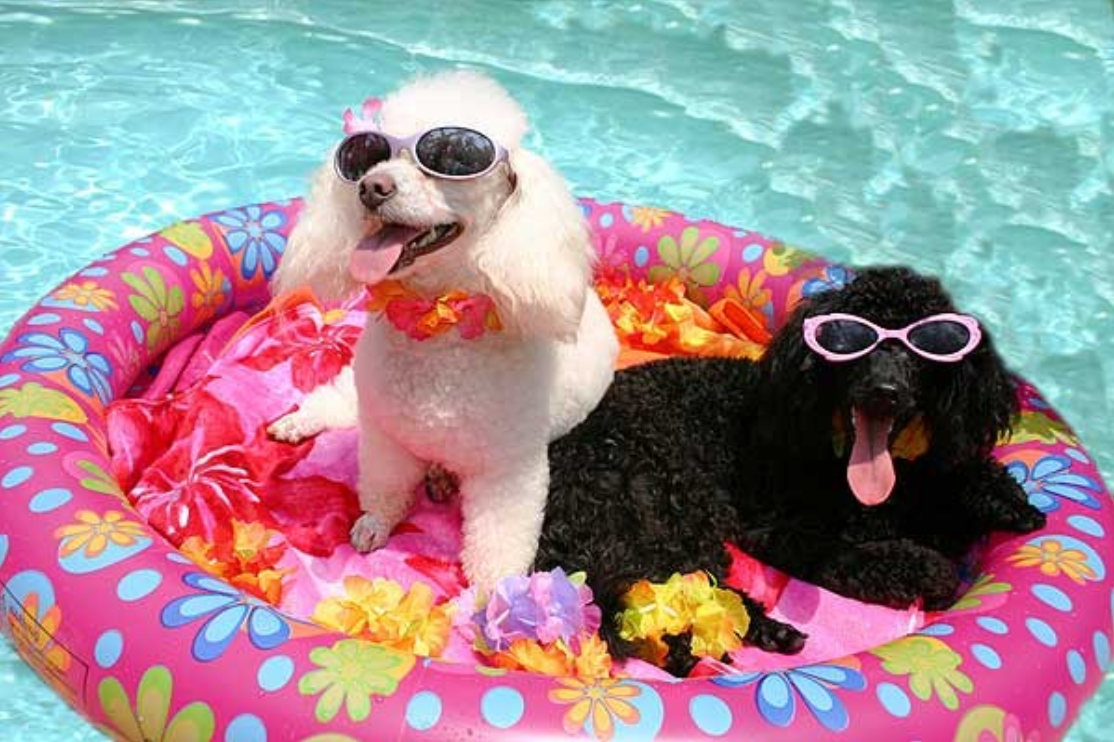
A cool, damp towel placed on your dog’s belly, chest, and neck provides fast relief. Kiddie pools filled with cool water give dogs a place to splash and lie down. Some owners add ice to the pool for extra cooling. Cooling vests and bandanas work by absorbing water and using evaporation to lower your dog’s temperature during walks.
Indoor comfort:
Keep your home as cool as possible. If you do not have air conditioning, create a cooling station with a fan directed at a damp towel on the floor.
Indoor enrichment for hot days:
When it is too hot for outdoor play, keep your dog entertained inside. Puzzle feeders, snuffle mats, frozen Kongs filled with peanut butter, and training sessions all provide mental stimulation without raising your dog’s body temperature.
How can I tell if my dog is overheating?
The earliest signs of overheating in dogs include excessive panting that does not stop after resting, heavy drooling with thick saliva, bright red gums, and restlessness. As overheating progresses, you may see lethargy, stumbling, vomiting, and confusion. If your dog collapses, has seizures, or loses consciousness, this is a life-threatening emergency that requires immediate veterinary care.
Should I shave my dog in summer to keep them cool?
In most cases, no. Dogs with double coats like Huskies, Golden Retrievers, and German Shepherds rely on their coat to regulate temperature in both hot and cold weather. Shaving removes the natural insulation that actually helps protect against heat. Regular brushing to remove loose undercoat is much more effective. Single-coated breeds may benefit from a trim, but never shave down to the skin, as this exposes your dog to sunburn.
How do I protect my dog’s paws from hot pavement?
Use the 7-second hand test: press the back of your hand against the pavement. If you cannot hold it there comfortably for 7 seconds, it is too hot for your dog. Walk on grass or dirt paths instead.
Can dogs get heat stroke from walking?
Yes, dogs can absolutely develop heat stroke from walking, especially during hot weather. Heat stroke from exercise can happen in as little as 15 minutes. Always walk during the coolest parts of the day, bring water, and watch for signs of overheating like excessive panting, lagging behind, or refusal to continue.
How do I cool down my dog quickly without supplies?
Move your dog to shade or a cool indoor space immediately. If you have access to any water source, pour it over your dog’s neck, armpits, and belly. Use your hands to fan air over their body. If you have a shirt or any fabric, soak it in cool water and drape it over your dog’s back and belly. Get to a veterinarian as soon as possible, even if your dog seems to recover.
Conclusion
Summer heat safety for dogs in hot weather comes down to three things: prevention, awareness, and quick action. Keep your dog hydrated, walk during the coolest hours, protect their paws from hot surfaces, and never leave them in a parked car. Know the signs of heat stroke so you can respond before it becomes life-threatening. And if your dog is a high-risk breed or has health conditions, take extra precautions throughout the entire season.
A few minutes of awareness can prevent a tragedy that changes a family forever. Stay safe, stay cool, and enjoy the summer with your four-legged companion.